


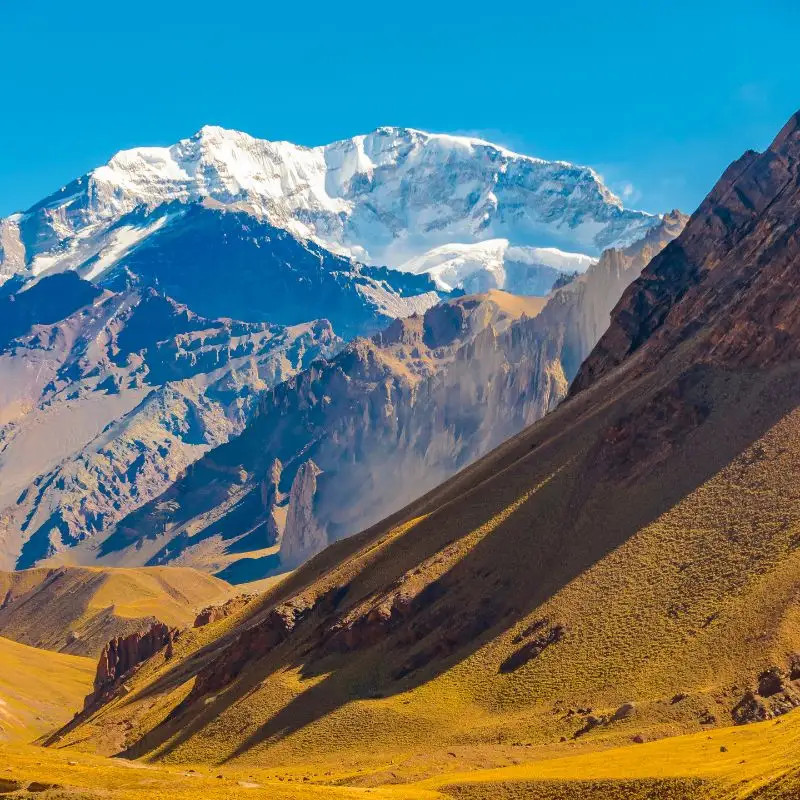
The best time to climb Aconcagua is not a matter of preference. Aconcagua Provincial Park runs a climbing and trekking season from mid-November to late February, and stops issuing new permits at the end of February. Outside those fifteen weeks you cannot legally attempt the mountain, whatever your fitness or your schedule says.
Inside that window there is a real decision to make, and it is the one this guide is about. January gives the most consistent weather, and it is also the busiest and the most expensive. Late November and February are quieter and colder, with less reliable weather at altitude. Below you will find the whole year month by month, what the climb actually costs once the park permit is counted separately, and an honest answer to whether a fit person with no technical climbing background can do it. We run SAK’s Aconcagua expeditions from Mendoza, an hour and a half from the park gate, so the dates and figures here are the ones we work with.
The perfect checklist for a Mendoza trip
Plan your trip, we care about you!
Download this awesome checklist!
DOWNLOAD NOW
Aconcagua Month by Month: When the Park Is Actually Open
Most guides to this question describe a season and leave it there. The practical version is a calendar, because for eight months of the year the answer is not “a bad time to climb” — it is “you cannot climb”. Here is the whole year.
| Month | Park status | What the mountain is doing | What can be done |
|---|---|---|---|
| January | Open · peak season | The most stable weather window of the year. Highest summit traffic and the highest prices. | Summit expeditions · all treks |
| February | Open · closes at month end | Still climbable, but conditions turn less reliable as the season winds down. The park issues no new permits after February. | Summit expeditions (early Feb) · treks |
| March | Closed to permits | Base camps shut. The high road is usually still open, so you can reach the viewpoint. | Viewpoint day tour only |
| April | Closed to permits | Clear air and long views from the road, first cold nights. | Viewpoint day tour only |
| May | Closed to permits | First snowfalls on the approach. The international pass starts closing on bad days. | Viewpoint day tour, road permitting |
| June | Closed to permits | Deep winter in the Andes. The pass closes often. | Viewpoint day tour, road permitting |
| July | Closed to permits | Coldest month. Snow and ice regularly shut the high road. | Viewpoint day tour, road permitting |
| August | Closed to permits | Still winter, and the windiest stretch of the year in the pre-Andean valleys. | Viewpoint day tour, road permitting |
| September | Closed to permits | Snow starts melting, routes begin to reopen at lower altitude. Not a climbing month, whatever you read. | Viewpoint day tour · lower-altitude treks |
| October | Closed to permits | Melt season. Muddy approaches and gusty afternoons, but the acclimatisation peaks around Vallecitos come back into condition. | Vallecitos and Cordón del Plata treks |
| November | Opens mid-month | The season starts. Colder and snowier than January, and far quieter. A serious option if you have the experience. | Summit expeditions from mid-Nov · treks |
| December | Open · high season | Full season. Conditions improving week by week towards the January peak. | Summit expeditions · all treks |
Two things fall out of that table. First, if someone offers you an Aconcagua summit climb in September, something is wrong — the related searches for this question are full of it, and the park is closed. Second, the shoulder weeks of the real season (mid-November and early February) are the only way to climb this mountain without crowds, and they cost you weather reliability in exchange.
What It Costs, With the Park Permit Counted Separately
The single most misleading thing about Aconcagua pricing is that the park permit is almost never shown next to the expedition price. It is a separate payment, it goes to the Mendoza provincial government rather than to any operator, and in high season a summit permit runs USD 1,000 to USD 1,400 per person. Budget it as its own line, because it is.
| What | Which tour | Price per person | When it runs |
|---|---|---|---|
| Park permit, summit attempt (high season) | Paid directly to the Mendoza provincial government | USD 1,000–1,400 | Not included in any expedition price |
| High Andes day tour to the Aconcagua viewpoint | Small group, one day | from USD 118 | All year, road permitting |
| Vallecitos trek, Cordón del Plata | Acclimatisation day | from USD 116 | Oct–Apr |
| Confluencia camp trek (3,400 m) | Inside the park, one day | from USD 259 | Nov–Mar |
| Plaza Francia trek, 3 days (4,100 m) | South wall viewpoint | from USD 371 | Nov–Mar |
| Plaza Francia + Plaza de Mulas, 7 days | Both base camps | from USD 880 | Nov–Mar |
Read the two halves of that table together and the shape of a realistic Aconcagua budget appears. A summit attempt is a permit plus a multi-week guided expedition. Everything below it on the table is a way to reach the mountain — genuinely, at altitude, inside the park — for a fraction of that, and those are the trips most people who ask this question actually want.

Can a Fit Person With No Climbing Experience Do It?
The Normal Route, approaching from the northwest, is non-technical: no ropes, no crampons on the standard line, no climbing skills required. That is the honest part of the answer, and it is why Aconcagua attracts people who have never climbed before.
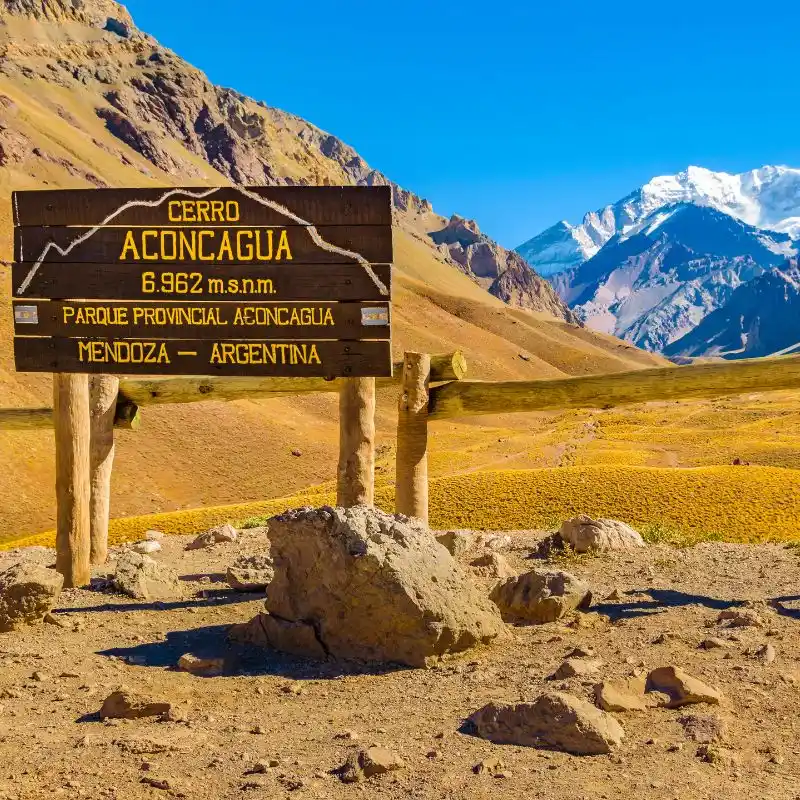
The other half of the answer is that at 6,962 metres (22,841 feet) the altitude, the cold and the wind make it a serious undertaking regardless of technique. What separates people who summit from people who turn around is almost never climbing ability. It is how many days their itinerary gives them to acclimatise, and whether the weather window lands inside those days. That is the thing to compare when you compare operators — not the price, the number of acclimatisation days.
The short answer above is the summit answer. The mountain is really a ladder, and most people asking this want a rung below the top: see the six levels of Aconcagua, graded, from the roadside viewpoint to the Normal Route, with what each one demands and how it compares to Kilimanjaro, Denali and Mont Blanc.
If you want the altitude without the expedition
There is a middle ground that most guides skip. You can walk into Aconcagua Provincial Park and stand at real altitude without committing to a summit attempt. The Confluencia camp trek reaches 3,400 m and gets you back to Mendoza the same evening. The three-day Plaza Francia trek goes to 4,100 m, at the foot of the south face — a wall of rock and ice no road or day trip reaches — and the seven-day version adds Plaza de Mulas, the base camp where summit expeditions actually start.
Acclimatising before you go high
The Cordón del Plata range south of Mendoza is where climbers acclimatise before the park, and it is open from October, a month before the season starts. A Vallecitos trek is the standard warm-up. If you are building an itinerary, adding days here is cheaper than adding them on the mountain and does the same job.
Planning Around the Window
If your dates are fixed and they fall outside mid-November to February, Aconcagua as a climb is off the table for that trip — but the mountain is not. If your dates are flexible, aim at January for a summit attempt and at either shoulder for everything else. And if you are still deciding what kind of trip this is, the treks in the table above put you inside the park, at altitude, in one to seven days. Tell us what you have in mind and we will tell you which window it fits.
The window tells you when. The other half of the planning is the approach: which entrance, how long the road takes and how far in each permit lets you go. That is in how you actually get to Aconcagua from Mendoza, including the day versions for anyone not attempting the summit.
Frequently Asked Questions
When does the Aconcagua climbing season start and end?
Mid-November to late February. The park stops issuing new permits at the end of February, so late February is effectively the last chance to start a summit attempt in a given season.
What is the single best month to climb Aconcagua?
January. It offers the most consistent weather windows of the season, which is what a summit attempt depends on. It is also the busiest and priciest month, so mid-November and early February are the trade-off if you want fewer people and can accept less reliable conditions.
Can you climb Aconcagua in September?
No. The park is closed to climbing and trekking permits in September. You can still reach the Aconcagua viewpoint from the road on a day tour when the international pass is open, and the acclimatisation peaks in the Cordón del Plata come back into condition around October.
How much does it cost to climb Aconcagua?
A summit attempt is a guided multi-week expedition plus a park permit of roughly USD 1,000 to 1,400 per person in high season, paid separately to the Mendoza provincial government. Trekking into the park costs far less: from USD 259 for the Confluencia day trek and from USD 371 for the three-day Plaza Francia trek.
Do you need technical climbing skills for Aconcagua?
Not for the Normal Route, which is non-technical. You need high-altitude endurance, cold tolerance and an itinerary with enough acclimatisation days. The mountain is demanding because of altitude, cold and wind, not because of the climbing.
What determines whether you reach the summit?
Two things, mostly: how many acclimatisation days your itinerary builds in, and whether a stable weather window falls within them. Fitness matters, but plenty of very fit climbers turn back because they went up too fast or ran out of days waiting for weather.
How high is Aconcagua and where does the trek reach?
The summit is 6,962 metres (22,841 feet), the highest peak in the Americas. Confluencia camp sits at 3,400 m and Plaza Francia at 4,100 m (13,451 ft), which is as high as you can get without a summit permit and a full expedition.

Pingback: Best Time to Visit Mendoza: Month by Month, With Real Costs
Pingback: High Mountains of Mendoza: A Local’s Guide to the Andes
Pingback: Things to Do in Mendoza: 20 Plans Sorted by Zone (2026)
Pingback: How to Get to Aconcagua from Mendoza (2026 Access Guide)
Pingback: How Hard Is It to Climb Aconcagua? The Six Levels, Graded
Pingback: Adventure and Sports in Mendoza: Trekking, Riding & More